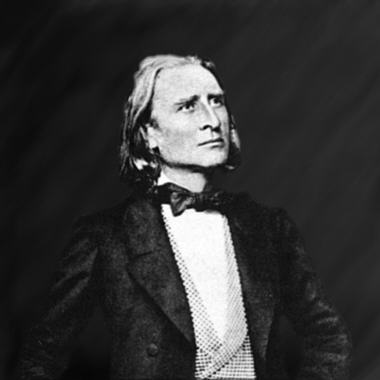
Franz Liszt (1811 – 1886) was a Hungarian virtuoso pianist and composer of the Romantic period of German descent. He was a renowned performer throughout Europe during the 19th century, noted especially for his showmanship and great skill with the piano. Today, he is considered to be one of the greatest pianists in history, despite the fact that no recordings of his playing exist. Liszt is frequently credited with re-defining piano playing itself, and his influence is still visible today, both through his compositions and his legacy as a teacher.
Probing into the depths of love, the piano notes turn into a search light illuminating all the layers of divine love, agape. Sober and spiritually invested passages of contemplation burst into intense activity at other moments. Expressions of love on the piano from a the master Franz Lizst. Instrumental, Classical, Classical Piano, Franz Liszt
La Campanella (“The Little Bell”). Etude No. 3 in G sharp minor from “The Grand Paganini Etudes”. S. 141. Refined and elegant composition for solo piano. Bright romantic masterpiece by Franz Liszt on the melody of Niccolo Paganini’s “Violin Concerto No. 2”. Instrumental, Classical, Romantic, Franz Liszt
Tenacious, strong expression of unconditional mature love. Deep resonating piece, thoughtful, introspective, rich and complicated, with multiple layers of meaning and definition. Instrumental, Classical, Classical Piano, Franz Liszt
Probing into the depths of love, the piano notes turn into a search light illuminating all the layers of love, erotic, divine, romantic and contradictory too perhaps. Thoughtful passages burst into intense activity at other moments. Expressions of love on the piano from a the master Franz Lizst. Instrumental, Classical, Classical Piano, Franz Liszt
A very Romantic track, Liebestraum means "Dreams of Love". Solo piano, 1800 romantic era, could be used for Concert hall scenes, travelogues, commercials, romantic breakup. Melodic and sensual to start with, this builds up before settling down with a very calm finish. Instrumental, Classical, Classical Piano, Franz Liszt
A real 'tour de force' which contains loud and highly dramatic brass sections enforced by thumping timpanis contrasting with soft flute and string passages. Huge epic presence. Performed by the MOSCOW INTERNATIONAL SYMPHONY ORCHESTRA. Instrumental, Classical, Romantic, Franz Liszt
Liszt Consolation no. 3 in D flat major S.172 Solo Piano. Performed live in studio by renowned concert pianist Vadim Chaimovich. Instrumental, Classical, Classical Piano, Franz Liszt
Liebesträume (German for Dreams of Love) is a set of three solo piano works (S.541/R.211) by Franz Liszt, published in 1850. Liebestraum No. 3 is a standard repertoire piece, and most concert pianists will have studied or performed it. Instrumental, Classical, Classical Piano, Franz Liszt
Beautiful, romantic solo piano theme with a flowing, gentle character. Tender, caring and heartwarming. Perfect for background and under dialog for Romance, love story, reflection, wedding, photo gallery Beautiful, romantic and sentimental piano. Perfect for film, romance, wedding, love. Instrumental, Classical, Classical Piano, Franz Liszt
Beautiful romantic piano masterpiece, slow & intense, used in many mainstream soundratcks. It’s style is similar to the Chopin Nocturnes, highly expressive & lyrical. Delicacy and grace with a rare beauty made of hope, with echoes of rippling nostalgia. This atmospheric piece is subtle and inviting. Instrumental, Classical, Classical Piano, Franz Liszt
Beautiful, romantic solo piano theme with a flowing, gentle character. Tender, caring and heartwarming. Perfect for background and under dialog for Romance, love story, reflection, wedding, photo gallery Beautiful, romantic and sentimental piano. Perfect for film, romance, wedding, love. Instrumental, Classical, Classical Piano, Franz Liszt
Hungarian Rhapsody No. 2, S.244/2, is the second in a set of 19 Hungarian Rhapsodies by composer Franz Liszt, and is by far the most famous of the set. Original piano solo. Instrumental, Classical, Classical Piano, Franz Liszt
Moody and dramatic, alternately dark and brooding then playful and rousing, this track encompasses the full range of human emotion and psyche. Part Broadway, part epic dramatic, part Can-Can, this track works well in films, games and multimedia creations. Instrumental, Classical, Romantic, Franz Liszt
Hungarian born Franz Liszt was one of the greatest pianists of all time. Michael Charles Clark follows in his footsteps with this magnificent rendition of Liebestraum, the Dream of Love! A mellow, somber yet sweeping composition that is perfect for documentaries, dramatic and romantic film and more. Instrumental, Classical, Romantic, Franz Liszt
Romantic and dreamy. Classical piano masterpiece by Franz Liszt (1811-1886). 19th century classical documentary famous piano public domain bright calm contemplative dreamy Emotional expressive Gentle Graceful hopeful Innocent, Instrumental, Classical, Romantic, Franz Liszt
Romantic sadness. Classical piano masterpiece by Franz Liszt (1811-1886). 19th century classical documentary famous piano public domain Alone Anguished Consoling Disenchanted Disillusioned down Drama dramatic expressive, Instrumental, Classical, Romantic, Franz Liszt
Intensely romantic. Classical piano masterpiece by Franz Liszt (1811-1886). 19th century classical documentary famous piano public domain Ballad calm contemplative Disenchanted Disillusioned dramatic dreamy Emotional Heartbroken yearning, Instrumental, Classical, Romantic, Franz Liszt
Catchy dynamic with a bit of magical feeling. Classical piano masterpiece by Franz Liszt (1811-1886). 19th century classical concert documentary famous history lively period piano public domain animated bizarre bouncy bright busy, Instrumental, Classical, Romantic, Franz Liszt
A cinematic arrangement of the famous La Campanella etude by Liszt (who arranged it from a violin concerto by Paganini). The melody is hauntingly beautiful, perfect for dramatic scenes, romance, haunting or mystical background music. Instrumental, Classical, Classical Piano, Franz Liszt
Melodic and sensual to start with, this builds up before settling down briefly and then fires up with passion and rhythm. One of Liszt's most played piano pieces. Perfect for dramatic or romantic films, television dramas, radio productions, operas, Broadway plays and much more. Instrumental, Classical, Classical Piano, Franz Liszt
Introspective Romantic-era solo piano track by Liszt. Style very similar to Chopin's Nocturnes. Beautifully recorded grand piano with excellent audio ambience. Its thematic variations express a series of moods. Great for spas, on-hold, restaurants, cafes, therapy, corporate use, movie soundtracks. Instrumental, Classical, Romantic, Franz Liszt
Tracks from the series Complete Years of Pilgrimage (Années de Pélerinage) by Franz Liszt performed by the award-winning pianist David-Ezra Okonsar. Classical, Romantic, Franz Liszt
Tracks from the series Complete Years of Pilgrimage (Années de Pélerinage) by Franz Liszt performed by the award-winning pianist David-Ezra Okonsar. Classical, Romantic, Franz Liszt
Tracks from the series Complete Years of Pilgrimage (Années de Pélerinage) by Franz Liszt performed by the award-winning pianist David-Ezra Okonsar. Classical, Romantic, Franz Liszt
Tracks from the series Complete Years of Pilgrimage (Années de Pélerinage) by Franz Liszt performed by the award-winning pianist David-Ezra Okonsar. Classical, Romantic, Franz Liszt
Tracks from the series Complete Years of Pilgrimage (Années de Pélerinage) by Franz Liszt performed by the award-winning pianist David-Ezra Okonsar. Classical, Romantic, Franz Liszt
Tracks from the series Complete Years of Pilgrimage (Années de Pélerinage) by Franz Liszt performed by the award-winning pianist David-Ezra Okonsar. Classical, Romantic, Franz Liszt
Tracks from the series Complete Years of Pilgrimage (Années de Pélerinage) by Franz Liszt performed by the award-winning pianist David-Ezra Okonsar. Classical, Romantic, Franz Liszt
Tracks from the series Complete Years of Pilgrimage (Années de Pélerinage) by Franz Liszt performed by the award-winning pianist David-Ezra Okonsar. Classical, Romantic, Franz Liszt
Tracks from the series Complete Years of Pilgrimage (Années de Pélerinage) by Franz Liszt performed by the award-winning pianist David-Ezra Okonsar. Classical, Romantic, Franz Liszt
Tracks from the series Complete Years of Pilgrimage (Années de Pélerinage) by Franz Liszt performed by the award-winning pianist David-Ezra Okonsar. Classical, Romantic, Franz Liszt
Tracks from the series Complete Years of Pilgrimage (Années de Pélerinage) by Franz Liszt performed by the award-winning pianist David-Ezra Okonsar. Classical, Romantic, Franz Liszt
Tracks from the series Complete Years of Pilgrimage (Années de Pélerinage) by Franz Liszt performed by the award-winning pianist David-Ezra Okonsar. Classical, Romantic, Franz Liszt
Tracks from the series Complete Years of Pilgrimage (Années de Pélerinage) by Franz Liszt performed by the award-winning pianist David-Ezra Okonsar. Classical, Romantic, Franz Liszt
Tracks from the series Complete Years of Pilgrimage (Années de Pélerinage) by Franz Liszt performed by the award-winning pianist David-Ezra Okonsar. Classical, Romantic, Franz Liszt
Tracks from the series Complete Years of Pilgrimage (Années de Pélerinage) by Franz Liszt performed by the award-winning pianist David-Ezra Okonsar. Classical, Romantic, Franz Liszt
Tracks from the series Complete Years of Pilgrimage (Années de Pélerinage) by Franz Liszt performed by the award-winning pianist David-Ezra Okonsar. Classical, Romantic, Franz Liszt
Tracks from the series Complete Years of Pilgrimage (Années de Pélerinage) by Franz Liszt performed by the award-winning pianist David-Ezra Okonsar. Classical, Romantic, Franz Liszt
Tracks from the series Complete Years of Pilgrimage (Années de Pélerinage) by Franz Liszt performed by the award-winning pianist David-Ezra Okonsar. Classical, Romantic, Franz Liszt
Tracks from the series Complete Years of Pilgrimage (Années de Pélerinage) by Franz Liszt performed by the award-winning pianist David-Ezra Okonsar. Classical, Romantic, Franz Liszt
Tracks from the series Complete Years of Pilgrimage (Années de Pélerinage) by Franz Liszt performed by the award-winning pianist David-Ezra Okonsar. Classical, Romantic, Franz Liszt
Tracks from the series Complete Years of Pilgrimage (Années de Pélerinage) by Franz Liszt performed by the award-winning pianist David-Ezra Okonsar. Classical, Romantic, Franz Liszt
Tracks from the series Complete Years of Pilgrimage (Années de Pélerinage) by Franz Liszt performed by the award-winning pianist David-Ezra Okonsar. Classical, Romantic, Franz Liszt
Tracks from the series Complete Years of Pilgrimage (Années de Pélerinage) by Franz Liszt performed by the award-winning pianist David-Ezra Okonsar. Classical, Romantic, Franz Liszt
Tracks from the series Complete Years of Pilgrimage (Années de Pélerinage) by Franz Liszt performed by the award-winning pianist David-Ezra Okonsar. Classical, Romantic, Franz Liszt
Tracks from the series Complete Years of Pilgrimage (Années de Pélerinage) by Franz Liszt performed by the award-winning pianist David-Ezra Okonsar. Classical, Romantic, Franz Liszt
COMPOSER KEYWORDS: Franz Liszt,music for video,buyout music,music for videos,music loops,production music library,world music,stock music loops,music for tv,stock music sound effects,cheap production music,television music,commercial stock music,royalty free music,stock music library,royalty free music downloads,stock music,websites music,royalty-free song,license music,film music,stock music tracks,tv music,music clips,instrumental music,music for film,corporate music,royalty free music library,business music,royalty free background music,AudioSparx,Liszt, Franz
Franz Liszt,
music for video,
buyout music,
music for videos,
music loops,
production music library,
world music,
stock music loops,
music for tv,
stock music sound effects,
cheap production music,
television music,
commercial stock music,
royalty free music,
stock music library,
royalty free music downloads,
stock music,
websites music,
royalty-free song,
license music,
Liszt, Franz